
Making Connections in Week Six

The connections between math and nature may not seem overtly obvious, seeming as if they belong in separate worlds. This simply isn't true and in actual fact the two are very closely connected. Math is all around us,from the design of a shell, to the probability used by predatory animals, or the symmetry of a butterfly's wings. Math was developed with the intention to describe the patterns that occur in nature.

Activities to Encourage Making Connections to Nature

Making connections to real life is essential to building the understanding of students, creating a positive mindset, and recognizing the inherent brilliance of the natural world. Connections can be easily made to symmetry, shapes, measurement, Fibonacci spirals, geometry, meteorology, and the concept of Pi. 

Symmetry is defined as when one half of an object is the mirror image of the other half. Examples of this that occurs in nature is a butterfly's wings or the symmetry of some flowers. Encourage students to provide a list of twenty examples of symmetry in nature. 

Another example which was highlighted this week was the connection of mathematics to nature through the Fibonacci Spiral. The Fibonacci Spiral is a series of squares with lengths that match the numbers in the Fibonacci sequence. When a line is drawn through the diagonals of each square, a spiral is formed. Examples of this in nature can be observed by looking at the shell of a snail or pine cones. 

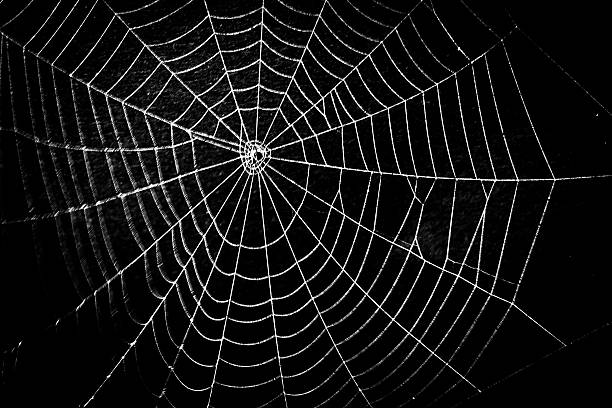
Image result for spider web
Frightening Spider Web. Havana 1234. September. 8, 2013. Sourced from:
http://istockpho.to/2ivi200

Geometry is the study of shapes and their properties. An example of this that can be observed in nature is a spiders' ability to spin a web. When a spider is born, it has the innate instinct and knowledge to build a web. Every specie of spider spins a unique web design. An interesting activity to present to students would be to have them analyze the process by which a spider spins a web while further identifying the geometrical parts of a spider web design.

Until next week!

Ashley  


Comments

Popular posts from this blog

Rich Tasks for Week Four

This week in math we discussed the importance of providing students with rich tasks rooted in mathematics. A rich task encourages students to think creatively, work logically, communicate ideas, synthesize their results, analyze different viewpoints, look for commonalities and evaluate findings. San Jose Library. Group Work on Cards. July.1,2009. Retrieved from: http://bit.ly/2woSSlZ  For a task to be rich it must be engaging in the sense that it has the potential to engage students in mathematical thinking. It must also have a meaningful mathematical focus that connects to the mathematics curriculum, process and content expectations.  It is important to challenge students meaningfully through problem solving. A rich task will be grounded in problem solving and will encourage students to reason his/her way to new understanding. The student would accomplish this by using multiple math processes while the instructor would allow ample time for explanation, justi...

Growth Mindset for Week Two

This week in mathematics I have learned and applied my newfound growth mindset. I countered my fixed way of thinking with positivism, telling myself that if I apply myself and use my conceptual knowledge, I too can prevail in math. City Year New York. Growth Mindset. Feb.16,2016. Sourced from: http://bit.ly/2ffB0GL  When the professor attempted to explain the card trick in a mathematical formula, my mind reverted to a fixed way of thinking. My initial reaction was that I couldn't do it and I began to "check out" of the demonstration so to speak. Being a reflective practitioner and student, I realized that I needed to have more confidence in myself and my abilities. I will honestly say that it took some time for me to understand how the formula was rewritten (ie. algebraically). I did eventually come to an understanding and I think that it is evidence that my mindset is changing. As educators we must model attitudes and behaviors for our students. If we model a ...

Learning Styles in the Classroom for Week Three

This week in mathematics we focused on the gratification of mathematics as well as understanding how to approach various types of learners in the classroom. JoanDragonfly. Venn Diagram of 3 Learning Styles. June.8,2017. Retrieved from: http://bit.ly/2y2gQrz  I had fun trying various tests that helped me to identify what type of learner that I am and surprisingly I have discovered that I am equally an audio and visual learner. I think it is imperative that instructors design their lessons, delivery, and classroom environment to enrich and engage various types of learners (ie. kinesthetic, visual, and audio).  I think it is important that we encourage students to understand how they learn best whether it be auditorally, visually, or kinestheically. With this being said, I also think that educators shouldn't encourage students to label themselves. When someone labels themselves as a certain type of learner, I believe that students may internalize that definition ...